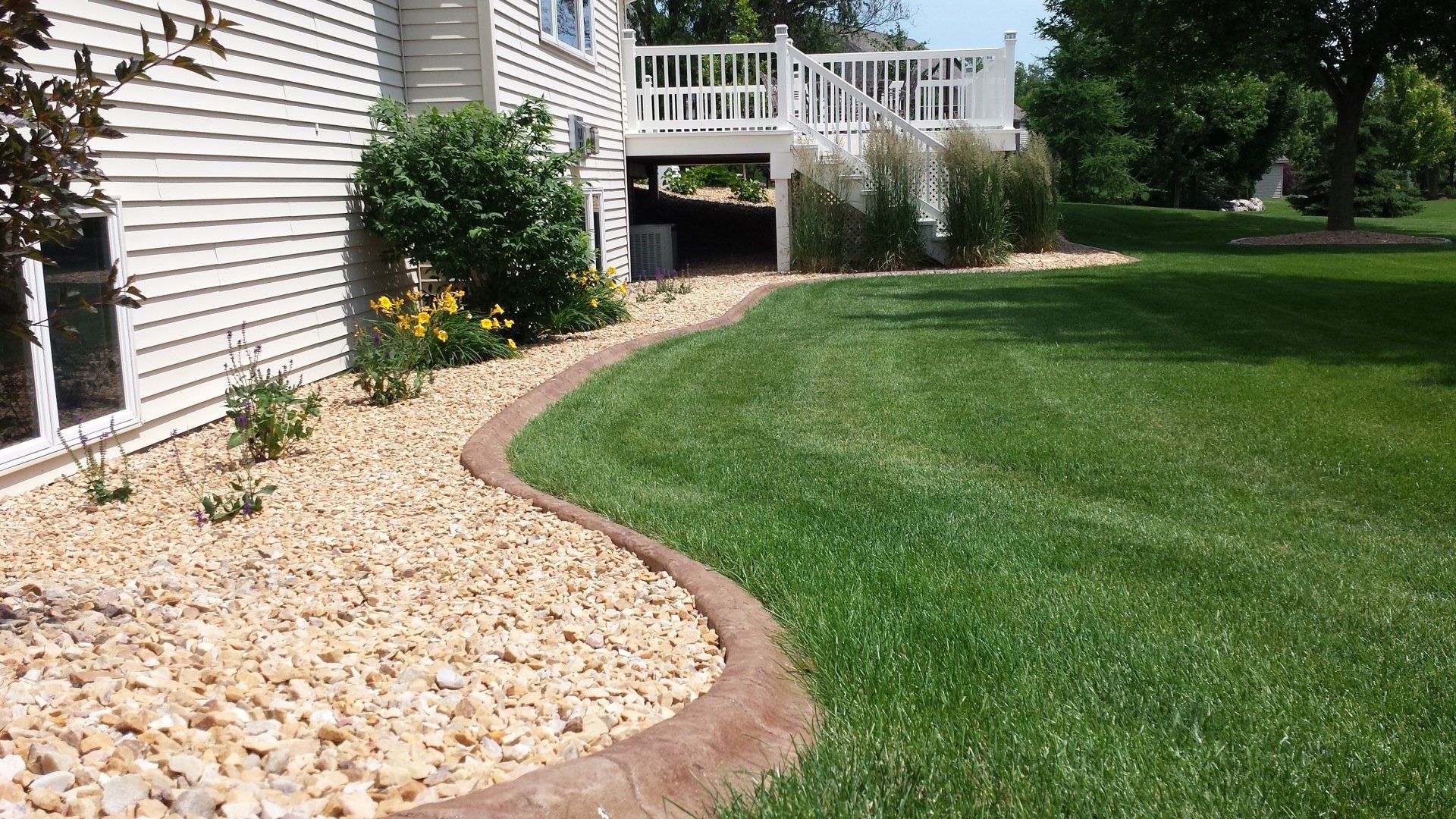
Does Concrete Landscape Curbing Hold Up Through Wisconsin Winters?
Wisconsin weather can be hard on anything installed outdoors. Temperatures rise and fall, moisture freezes and expands, and the ground shifts throughout the year. If you’re considering concrete landscape curbing, it’s reasonable to wonder whether it will hold up through our winters.
The short answer is yes—quality concrete landscape curbing can perform very well in Wisconsin. However, the way it is prepared, reinforced, installed and protected makes a major difference.
Here’s what Fox Valley property owners should know before choosing permanent concrete edging.
Why Wisconsin Winters Can Be Tough on Landscape Edging
Winter damage is not caused by cold temperatures alone. The bigger issue is the repeated freezing and thawing that happens throughout the season.
Water can enter small openings in concrete or collect around the base. When that water freezes, it expands. When temperatures warm, it thaws again. This process may repeat many times during a Wisconsin winter.
Seasonal ground movement can also place pressure on landscape borders. Lightweight plastic edging may lift out of the ground, individual pavers can shift, and improperly installed concrete may crack in the wrong places.
That is why landscape curbing should be installed as a complete system—not simply poured on top of the lawn.
Proper Preparation Creates a Stronger Foundation
Durable landscape curbing begins before any concrete is mixed.
The proposed layout should first be marked so the curves, corners and bed lines fit the property. A strip of sod is then removed to create a prepared curb bed. This gives the curbing a consistent place to sit and helps create a clean, uniform installation.
Good preparation also gives the installer an opportunity to account for the shape of the yard, nearby pavement, drainage and other conditions that could affect the finished border.
Concrete curbing placed on a properly prepared bed has a much better chance of remaining consistent through changing seasons.
Reinforcement Helps the Curbing Work as One Continuous Border
Concrete is strong under compression, but long, narrow sections can be vulnerable to movement if they are not reinforced.
CurbScape installs aircraft-grade steel cable within its concrete curbing. The cable is fed into the concrete during extrusion, helping connect and reinforce the continuous border.
This does not mean concrete becomes completely immune to movement or cracking. No reputable concrete contractor should promise that. Reinforcement does, however, provide additional support and helps the curbing work as a unified system rather than as a series of disconnected pieces.
CurbScape’s DuraCurb system includes this steel cable reinforcement along with a five-year warranty and sealer/protectant.
Control Cuts Give the Concrete Room to Move
One of the most important details in landscape curbing is something homeowners may barely notice: control cuts.
Concrete naturally expands, contracts and responds to changes in the ground beneath it. Control cuts create planned points where that movement can occur. Without them, stress may lead to unsightly cracking in unpredictable places.
As part of its installation process, CurbScape places control cuts approximately every two feet. These cuts help the curbing flex through Wisconsin’s freeze-thaw cycles while reducing the risk of lateral cracks and chipping.
Control cuts do not weaken the curbing. They help manage movement in a controlled way.
Compaction and Finishing Matter
CurbScape mixes its concrete, color and strengthening additives on site. A curbing extruder then compacts the mixture while forming it into a continuous border.
Compaction is important because it helps create dense, consistently shaped concrete. After extrusion, the curbing is finished by hand to produce smooth curves, straight lines and a uniform appearance.
These steps affect more than curb appeal. Consistent mixing, extrusion and finishing all contribute to the strength and quality of the finished product.
Sealing Protects the Finished Surface
Sealer adds another layer of protection to decorative concrete curbing. It helps protect the surface and maintain the vibrancy of the selected color and design.
CurbScape applies a quality sealing product at the end of its installation process. This creates a professional finish and helps protect the curbing from exposure to sunlight and the elements.
Sealer does not make concrete indestructible, but it is an important part of protecting a decorative concrete surface.
How to Care for Concrete Curbing During Winter
Professionally installed concrete curbing is relatively easy to maintain, but a few practical habits can help protect it.
Be careful with snow-removal equipment
Avoid striking the curbing with a snowblower, plow, shovel or other metal equipment. A direct impact can chip an edge even when the concrete itself is in good condition.
If curbing is installed near a driveway, walkway or parking area, make sure anyone handling snow removal knows where the border is located.
Ask before applying deicing products
Some deicers can be harsh on concrete surfaces. Before applying salt or another ice-melting product directly on or next to decorative curbing, ask the installer what products are appropriate.
Pay attention to drainage
Water should not be allowed to collect against the curbing whenever it can be avoided. Proper grading and drainage help reduce unnecessary moisture around any outdoor concrete installation.
Inspect the border in spring
Once the snow melts, walk around the curbing and check for damage caused by plows, shovels, falling branches or other impacts. Finding a problem early makes it easier to ask about the proper next step.
Concrete Curbing Versus Lightweight Edging in Winter
Plastic and thin metal edging can be useful for temporary or budget-conscious projects. However, these materials may lift, bend or shift as the soil moves. Sections can also separate over time, leaving uneven bed lines.
Individual landscape blocks and pavers provide a heavier option, but each piece can move independently. This can create uneven sections that need to be reset.
Concrete landscape curbing creates a continuous, reinforced border. When properly prepared and installed, it offers a more permanent solution with fewer loose pieces to straighten or replace every spring.
Is Concrete Curbing Right for Every Property?
Concrete curbing is a strong choice for property owners who want a defined, finished border around flower beds, trees, walkways or other landscaped areas. It offers durability, design flexibility and a cleaner division between the lawn and planting beds.
Because it is intended to be permanent, the layout should be planned carefully. Homeowners expecting to frequently move or expand their landscape beds may prefer a more temporary form of edging until the layout is settled.
For an established landscape, concrete curbing can provide the lasting structure and finished appearance that lightweight edging often cannot.
Landscape Curbing Built for Northeast Wisconsin
CurbScape has installed decorative concrete landscape curbing in Appleton, the Fox Valley and surrounding Northeast Wisconsin communities since 1998. Our process includes careful bed preparation, on-site mixing, steel cable reinforcement, control cuts, hand finishing and protective sealer.
If you’re considering landscape curbing for your home or business, we’ll help you select the right layout, shape, color and design for your property.
Contact CurbScape to tell us about your project and request pricing.