Concrete vs. Plastic, Metal and Paver Edging (What's Best)
A good landscape border does more than outline a flower bed. It helps separate grass from mulch or stone, gives the yard a more finished appearance, and makes landscaped areas easier to maintain.
The difficult part is deciding which material to use.
Concrete curbing, plastic edging, metal borders and landscape pavers can all serve a purpose. The best landscape edging for your Wisconsin property depends on your budget, the look you want, how permanent the landscape is and how much maintenance you’re willing to handle.
Here’s an honest comparison of the most common options.
Concrete Landscape Curbing
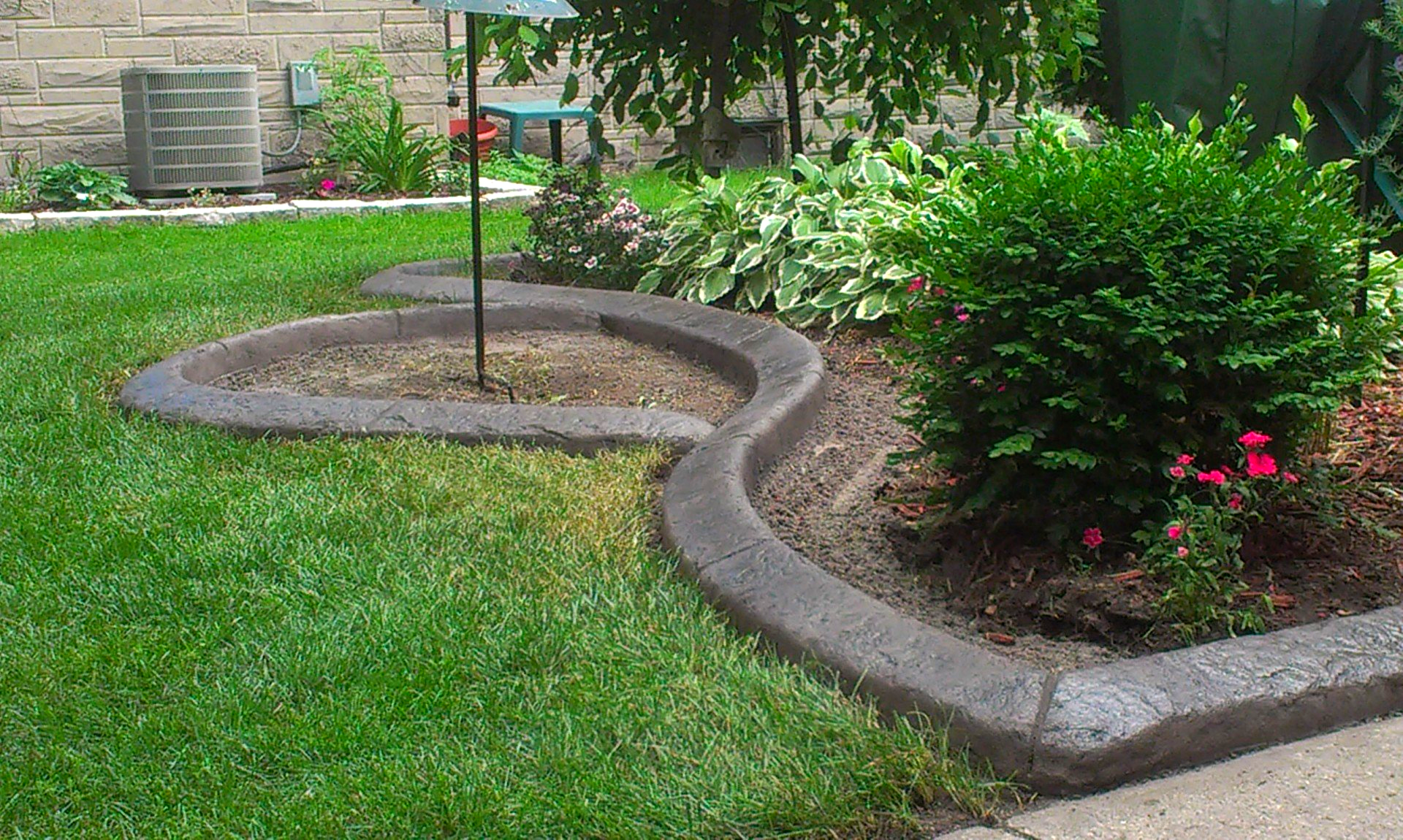
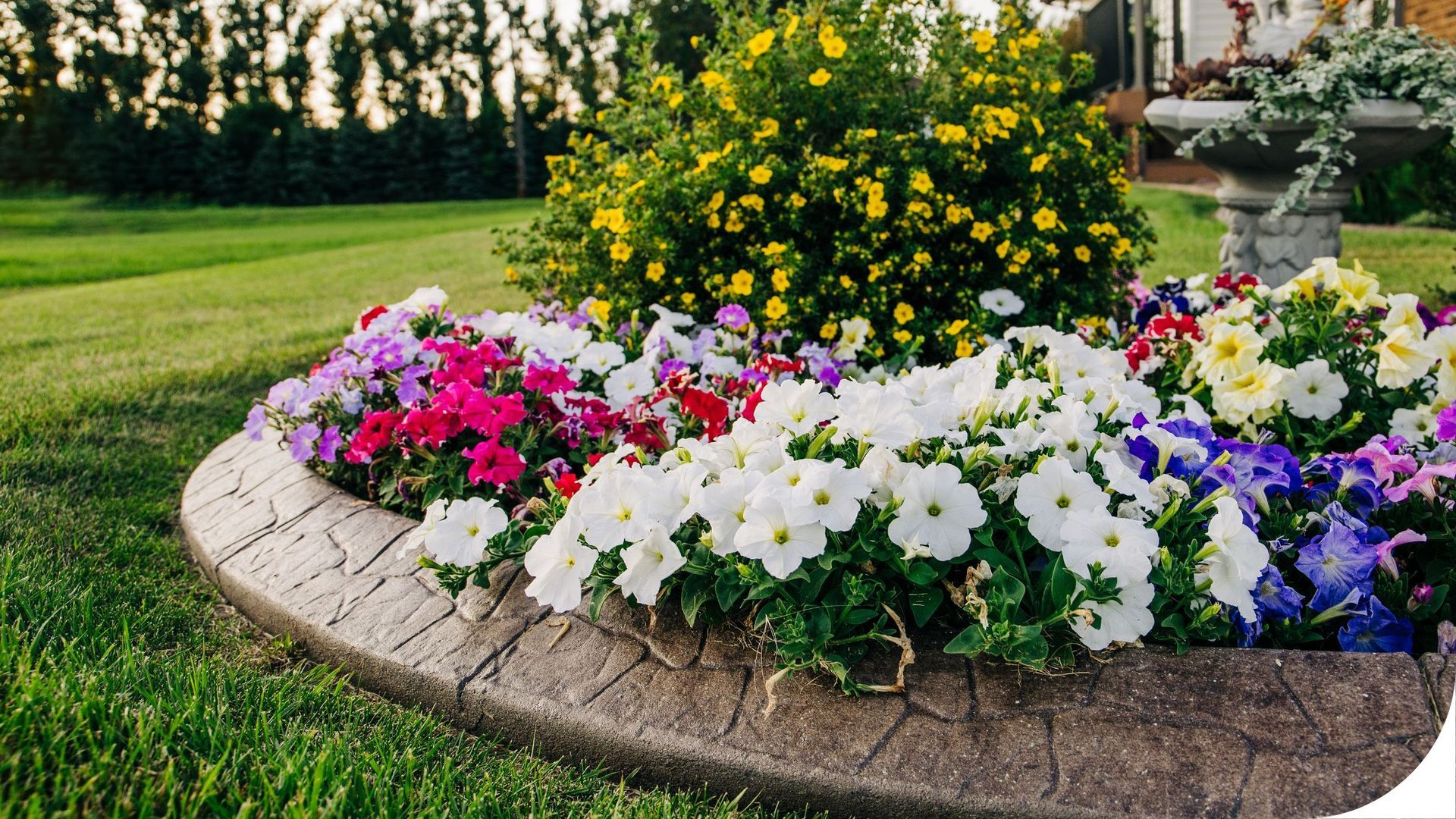
Decorative concrete curbing is installed as a continuous border around flower beds, trees, walkways and other landscape features. It can follow straight lines, sweeping curves and custom layouts.
Unlike basic poured concrete, decorative curbing can be customized with different shapes, colors, textures and stamped patterns. This allows the border to complement the home, landscaping and surrounding hardscapes.
Advantages of concrete curbing
- Creates a permanent, finished border
- Does not have loose sections that need to be realigned
- Offers numerous colors, shapes and decorative designs
- Can follow curves and custom bed layouts
- Provides a clear separation between grass and landscaping
- Offers mower-friendly shape options
- Works for residential and commercial properties
Things to consider
Concrete typically requires a larger initial investment than plastic or basic metal edging. It is also meant to remain in place, so it may not be the best choice if you expect to frequently move or redesign your landscape beds.
Concrete can develop cracks if it is poorly prepared or installed without appropriate reinforcement and control cuts. For Wisconsin properties, installation quality is especially important because of our recurring freeze-thaw cycles.
Concrete curbing is best for homeowners who have an established landscape and want a durable, customized border.
Plastic Landscape Edging
Plastic edging is widely available and relatively easy to install. It is commonly sold in rolls or interlocking sections that are anchored into the soil.
Advantages of plastic edging
- Low initial material cost
- Available at most home improvement stores
- Flexible enough to form curved bed lines
- Can be installed as a do-it-yourself project
- Easier to remove or relocate than concrete
Things to consider
Plastic edging can lift out of the ground as soil freezes, thaws and shifts. Sections may separate, warp or become visible above the grass. Lawn equipment can also damage exposed edges.
Although plastic is inexpensive initially, it may require occasional straightening, re-anchoring or replacement. Its appearance is usually more functional than decorative.
Plastic edging can make sense for temporary gardens, evolving landscape plans or projects where keeping the upfront cost as low as possible is the main concern.
Metal Landscape Edging
Metal edging creates a narrow, understated line between the lawn and landscape bed. Steel and aluminum are common choices, although their durability and resistance to corrosion can vary.
Advantages of metal edging
- Creates a clean, minimal appearance
- Takes up very little visual space
- Works with straight or gently curved layouts
- Less visually noticeable than many plastic products
- Can be removed or adjusted more easily than concrete
Things to consider
Metal can bend when struck by lawn equipment or other heavy objects. Sections and anchors may move as the soil shifts. Depending on the material and finish, corrosion may also become a concern.
Because the upper edge is narrow, it may not provide the same decorative presence or visual separation as concrete curbing or pavers.
Metal edging is often a good fit for modern landscapes where the homeowner wants a simple border that nearly disappears into the design.
Landscape Pavers and Blocks
Pavers, bricks, and landscape blocks can create an attractive border with a traditional or handcrafted appearance. They are available in numerous sizes, shapes and colors.
Advantages of paver edging
- Wide variety of styles and materials
- Individual pieces can be replaced
- Can complement an existing patio or walkway
- Suitable for straight lines and gradual curves
- Can be installed by an experienced do-it-yourselfer
Things to consider
Each paver is a separate piece, so the border can shift unevenly as the ground moves. Pavers may sink, tilt, or separate over time. Grass and weeds can also grow through the joints.
Keeping the border level may require resetting individual pieces and refreshing the base beneath them. Tight curves can be difficult to create without small pavers or extensive cutting.
Pavers work well for homeowners who like their traditional appearance and do not mind occasional adjustments.
A Natural or Spade-Cut Edge
Another option is to skip an installed material and create a clean trench between the grass and landscape bed.
A fresh natural edge looks neat and costs very little to create. However, it gradually loses its shape as grass spreads, soil erodes, and mulch moves. Maintaining it requires repeated cutting throughout the growing season.
This approach can work well for homeowners who enjoy regular yardwork or want to test a new bed layout before installing permanent edging.
Which Edging Requires the Least Maintenance?
Every landscape border requires some care, but the type of work varies.
Plastic and metal edging may need to be pushed back into place or re-anchored. Pavers may need to be leveled and cleared of weeds. A natural edge must be recut regularly.
Concrete curbing eliminates loose individual pieces and maintains a consistent shape. Basic cleaning and reasonable care around lawn and snow-removal equipment are still important, but homeowners do not typically have to rebuild the border each spring.
Which Option Looks Best?
Appearance is personal, but the architectural style of the home should guide the decision.
Metal edging works well when the border is meant to disappear. Pavers can coordinate with a brick walkway or patio. Natural edging creates a soft, informal transition.
Decorative concrete curbing becomes a visible part of the landscape design. CurbScape offers multiple curbing shapes, nearly 50 color options, and patterns ranging from subtle textures to stone- and brick-inspired designs.
The result can be quiet and understated or become a more noticeable architectural accent.
What Handles Wisconsin Weather Best?
No landscape material is completely unaffected by Wisconsin weather.
Plastic may become brittle or lift as the soil moves. Metal can bend, shift, or corrode. Pavers may heave individually. Concrete can crack if movement is not properly managed.
The difference comes down to product quality and installation. CurbScape’s concrete curbing process includes steel cable reinforcement, compaction, control cuts approximately every two feet, and protective sealer. These elements are designed to create a stronger, more consistent border through changing seasons.
How to Choose the Right Landscape Edging
Before deciding, ask yourself:
- Is my landscape layout settled, or might I change it soon?
- Do I want the edging to blend in or add decorative character?
- How much seasonal maintenance am I willing to perform?
- Do I need the border to work around tight curves or custom beds?
- How important is it for the edging to coordinate with my home?
- Am I choosing based only on initial cost or on long-term value?
There is no single material that is best for every yard. Temporary beds may only need plastic or a natural edge. A contemporary design might call for thin metal. A paver border may be appropriate when it matches an existing walkway.
For an established landscape where appearance, customization, and permanence matter, decorative concrete curbing is difficult to beat.
Explore Decorative Concrete Curbing in the Fox Valley
CurbScape has helped homeowners and businesses enhance their landscapes throughout Appleton and Northeast Wisconsin since 1998.
You can explore our completed residential curbing projects and see how a well-planned border changes a property in our before-and-after gallery.
Have questions about the best edging for your property? Contact CurbScape to discuss your ideas and request project pricing.